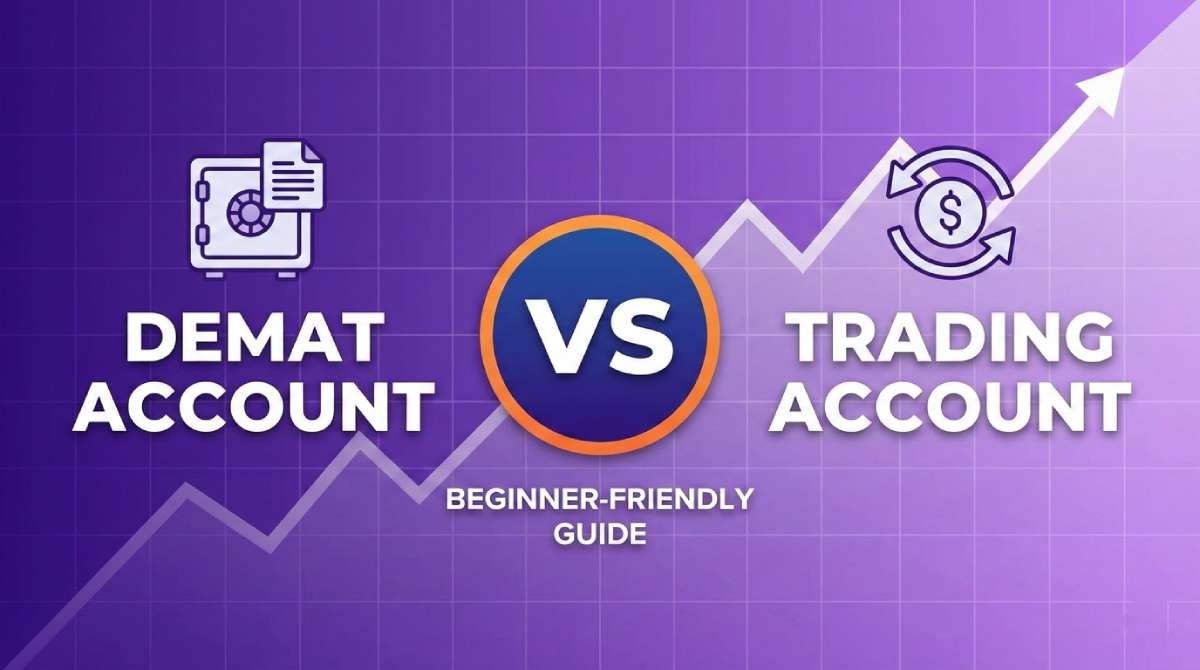
Demat vs Trading Account: What’s the Real Difference for Beginners?
If you’re new to the stock market, this confusion is almost guaranteed.
You open a broker website.
They ask for a demat account.
They also talk about a trading account.
And you think:
“Why do I need two accounts just to buy one stock?”
I’ve seen this question more times than I can count. And honestly, the confusion makes sense. Nobody explains this clearly at the start.
This article breaks down demat vs trading account in the simplest possible way—what each one does, why both are needed, and how beginners should think about them.
What Is a Demat Account?
A demat account is used to store your financial assets in electronic form.
Demat = Dematerialized.
Earlier, shares existed as physical certificates. Today, everything is digital. Your demat account is where those digital shares are kept.
Think of a demat account as a locker.
You don’t buy or sell inside the locker.
You just store things there.
What a Demat Account Holds
-
Shares
-
ETFs
-
Bonds
-
Mutual fund units (in many cases)
If you own a stock, it must sit in a demat account. There is no alternative.
What Is a Trading Account?
A trading account is used to buy and sell securities in the stock market.
If demat is the locker, the trading account is the action button.
This is the account you use to:
-
Place buy orders
-
Place sell orders
-
Execute trades during market hours
Without a trading account, you cannot participate in market transactions.
Demat vs Trading Account: Core Difference
Here’s the simplest way to understand demat vs trading account:
-
Demat account → Stores what you own
-
Trading account → Helps you buy and sell
One holds.
The other acts.
They do different jobs, but they must work together.
Why Do You Need Both Accounts?
This is the key beginner question.
When you buy a stock:
-
Trading account places the order
-
Trade gets executed on the exchange
-
Shares move into your demat account
When you sell a stock:
-
Trading account places sell order
-
Shares move out of demat account
-
Money gets credited to your bank
Without a demat account, there’s nowhere to store shares.
Without a trading account, there’s no way to buy or sell.
That’s why brokers usually open both together.
Demat vs Trading Account: Beginner Comparison Table (Conceptual)
Instead of a table, remember it like this:
-
Demat account = Storage
-
Trading account = Transaction
-
Bank account = Money movement
All three are connected.
Can You Have a Demat Account Without a Trading Account?
Yes. But it’s rare for beginners.
You might have a demat account if:
-
You only hold long-term investments
-
You inherited shares
-
You don’t actively trade
But the moment you want to buy or sell on your own, you’ll need a trading account.
Can You Have a Trading Account Without a Demat Account?
No.
A trading account alone is useless without a demat account. Every trade needs a place to settle.
This is where beginners get stuck—they try to understand which one comes first.
Answer:
Demat + Trading always go together for active market participation.
Demat vs Trading Account for Beginners: Which Comes First?
Practically, both are opened at the same time.
But conceptually:
-
Demat is about ownership
-
Trading is about activity
If you’re a beginner, don’t overthink the order. Choose a broker and open a combined account.
How Demat and Trading Accounts Work Together in Daily Trading
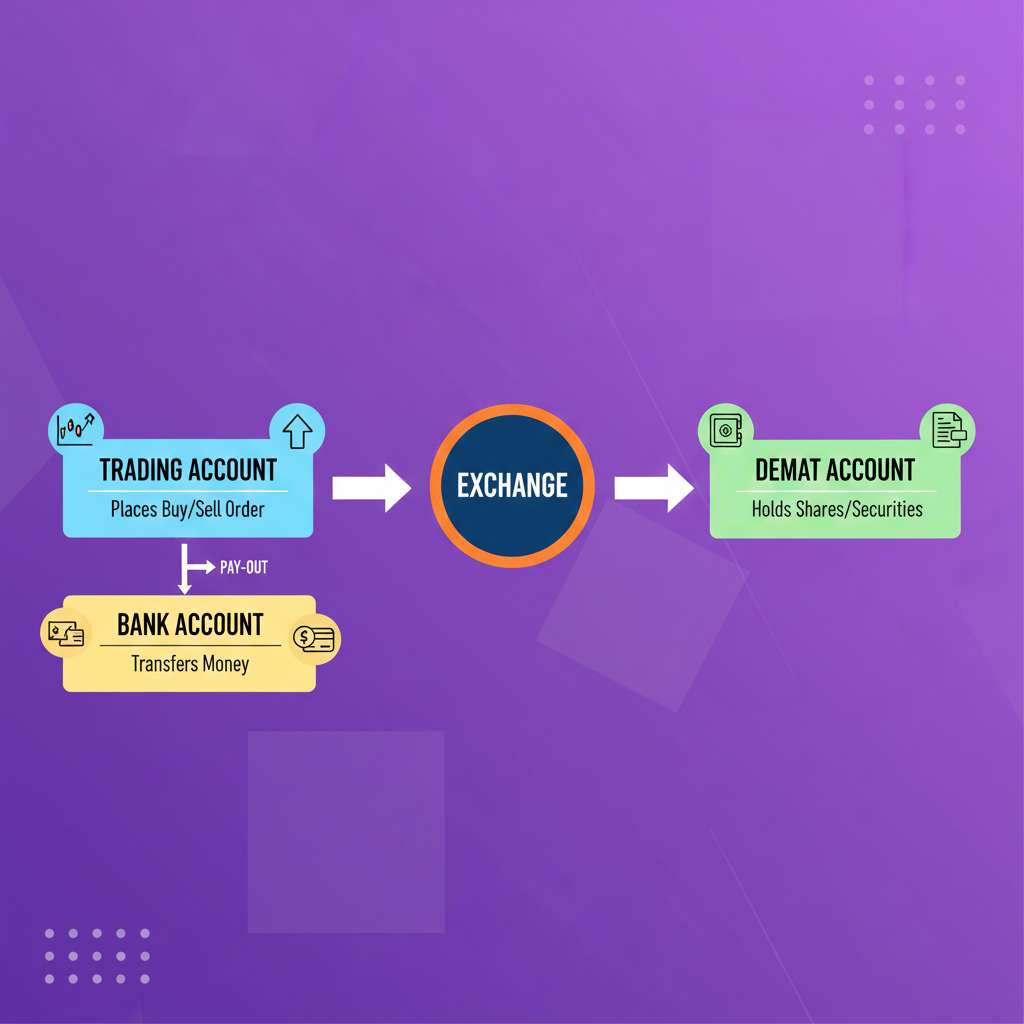
Let’s say you buy 10 shares today.
-
You place the order using your trading account
-
The trade executes
-
After settlement, shares appear in your demat account
Now you hold them.
When you sell:
-
Trading account executes the sell
-
Shares leave the demat account
-
Money goes to your bank
This flow never changes.
Common Beginner Mistakes About Demat vs Trading Account
From experience, these mistakes are very common:
-
Thinking both accounts do the same job
-
Trying to trade without understanding settlement
-
Believing demat account is “optional”
-
Confusing bank account with demat account
Clearing this confusion early saves time and frustration later.
Demat vs Trading Account: Which Is More Important?
Neither is more important. They are interdependent.
But if we’re being practical:
-
Trading account helps you act
-
Demat account protects what you own
You can stop trading anytime, but your demat account will still hold your assets.
Who Should Focus More on Demat Account?
-
Long-term investors
-
Delivery traders
-
People holding stocks for months or years
For them, demat account security and reliability matter more.
Who Should Focus More on Trading Account?
-
Intraday traders
-
Active traders
-
Options and futures traders
For them, execution speed, platform stability, and order types matter more.
FAQs: Demat vs Trading Account
Is demat account mandatory?
Yes. You cannot hold shares without it.
Is trading account mandatory?
Yes, if you want to buy or sell on your own.
Can one demat account have multiple trading accounts?
Yes, with some brokers.
Do I need separate demat accounts for trading and investing?
No. One demat account is enough.
Is demat account charged yearly?
Usually yes. It’s called AMC (Annual Maintenance Charge).
Final Thoughts
The demat vs trading account confusion is normal.
Just remember this:
-
Demat account = ownership
-
Trading account = execution
One stores.
One moves.
Together, they form the foundation of your trading setup.
Once this is clear, everything else—charts, strategies, risk—starts making more sense.